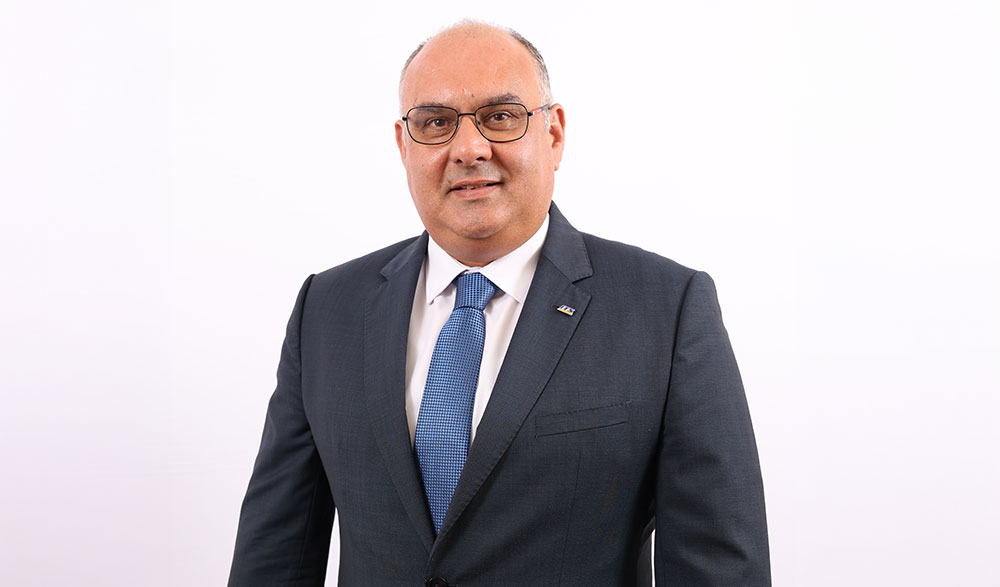
Apr 2026 Interview with Mr. Pierre Fenech, CEO of Institute of Tourism Studies (ITS), Malta
As Malta advances its long-term national strategy under Malta Vision 2050, education and human capital development will play a central role in ensuring sustainable economic growth, particularly in tourism — one of the country’s key pillars. How is the Institute of Tourism Studies aligning its academic and training programs to support the objectives of Malta Vision 2050?
At the Institute of Tourism Studies (ITS), our main aim is to support the tourism and hospitality industry, which is our core focus as a specialized institute. We do this primarily by training students through programs ranging from EQF Level 2 foundation courses up to Level 7 master’s degrees. Our modular system allows students to enter employment at different stages or continue progressing to higher levels. We understand that not everyone will complete the full academic pathway and that is perfectly acceptable. What matters most is that our graduates are well prepared with the skills needed to strengthen the industry and improve the quality of service we offer to our visitors.
We are proud of the high quality of our students, which is recognized both in Malta and abroad. While some graduates choose to work overseas to gain experience, many later return, bringing valuable skills and insights that strengthen our industry. In addition to full-time programs, we offer a training school for professionals already working in the industry. Given how fast the sector evolves, continuous upskilling and reskilling are essential.
Our approach has two streams: full-time students who gain formal qualifications and industry employees who attend part-time courses. We also deliver training directly within companies, making it easier for organizations to develop their workforce. These courses combine both practical and theoretical learning, depending on the subject.
The global tourism industry is undergoing rapid transformation, driven by digitalization, sustainability demands and evolving traveler expectations. How is the Institute of Tourism Studies adapting its curriculum to equip students with the skills required for this new era of tourism?
We regularly work with industry experts, alumni and professionals through focus groups to review and update our curriculum. Without this constant collaboration, programs quickly become outdated, so maintaining close communication with the industry is essential. We are now strengthening this approach by creating dedicated advisory boards for each stream. For example, the events stream will include local and international experts, alumni, students and lecturers who will help shape the curriculum, identify new trends and prepare students for the future of the industry.
We are proud that 98% of our graduates secure relevant positions within the industry after graduation — an exceptionally strong result. Our goal is for students to be “plug-and-play” professionals who can start working immediately anywhere in the world, with minimal adjustment beyond adapting to a company’s specific culture.
Malta continues to strengthen its position as a high-quality, year-round tourism destination, requiring a skilled workforce capable of delivering excellence across all touchpoints. What role does the ITS play in elevating service standards and supporting Malta’s international reputation?
It is very important to shift our focus from quantity to quality. As a small island, we cannot keep increasing numbers indefinitely, so we must aim for higher-quality tourists, products, services and employees. Staff are the key factor in improving service standards. You may have the best five-star property on the island, but without well-trained employees to run it, the final result will not meet expectations. It is our students, not just the institute, who build this reputation. They go out into the industry and demonstrate what they have learned, proudly representing us wherever they go. All our courses include internships, both locally and abroad, and our students consistently make us proud during placements and international competitions.
Recently, we were honored that one of our students competed at the European Parliament of the Association of Hotels and Catering Schools of Europe and was appointed Student President of the association — a significant achievement for someone from one of Europe’s smallest countries.
As competition among educational institutions grows globally, attracting international talent and building cross-border partnerships becomes increasingly important. What strategies is the ITS implementing to enhance its international presence and appeal to students from abroad?
In addition to being located on a beautiful and safe Mediterranean island, we offer high-quality education and actively collaborate with leading international institutions. For example, in culinary arts we partner with the Institut Lyfe (formerly Institute Paul Bocuse) to deliver joint degrees and in management we work with Haaga-Helia University of Applied Sciences in Finland. These long-standing partnerships extend across all sectors.
We also offer unique programs, including the world’s first Bachelor’s in Diving Safety Management and a Diploma in Climate-Friendly Travel, reflecting the realities of climate change affecting island nations. As part of our social responsibility, we provide 50 scholarships annually to students from countries most affected by climate change. We are also expanding internationally, with satellite campuses in Shanghai and Zhengzhou, China, currently serving around 100 students and plans for further global expansion.
To attract more international students, we align our programs with the European Qualifications Framework, ensuring our certificates are widely recognized and carry strong international value. We have also applied for accreditation with the International Centre of Excellence in Tourism and Hospitality Education. Following a recent audit, we were awarded full accreditation without any recommendations. From our next graduation in December, all graduates will also receive the seal of this international accreditation body.
Looking ahead, institutions must continuously evolve to remain relevant and impactful in a fast-changing world. What is your long-term vision for the Institute of Tourism Studies, and how do you see it contributing to Malta’s broader economic and social development in the years to come?
Our top priority is relocating to our new campus at SmartCity. As we internationalize and attract more students from abroad, we need additional space to accommodate this growth. The project is well advanced, with excavation works completed and we are now moving into the construction phase.
Our target is to begin operations at the new campus by 2029. At the same time, we continue to expand internationally by establishing satellite campuses in other countries when opportunities arise.
What is your final message for our readers of FOREIGN POLICY?
Countries interested in hosting a satellite campus usually approach us through embassies or consulates and we are open to exploring such opportunities. However, not every proposal is accepted, as each partnership goes through a strict quality assurance process.
It is essential that our standards remain identical across all locations — whether in Malta, China, South America or elsewhere — so every graduate receives the same level of qualification and value. Our recent international accreditation further strengthens our ability to partner with like-minded institutions that meet the same standards. We are proud of what we have achieved, but we continuously push to improve — because standing still eventually means falling behind.
Sorry, the comment form is closed at this time.