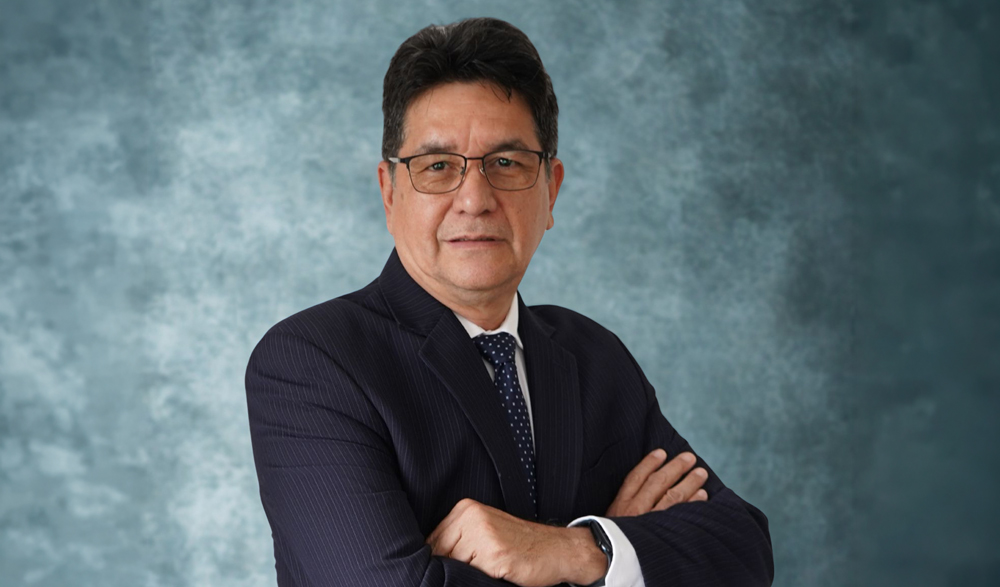
Jun 2026 Interview with Jesús Enrique Mora Marín, CEO Brunei Methanol Company (BMC), Brunei
In 2024, Brunei delivered its strongest economic expansion since 1999, powered by a decisive pivot toward downstream industrialization under Wawasan Brunei 2035. What specific policy, investment and execution decisions have enabled such rapid and sustained growth in Brunei’s downstream sector under Wawasan Brunei 2035?
The Wawasan Brunei 2035 clearly stated that the only way to keep the economy sustainable was to diversify beyond oil and gas. One of the key strategies was to develop downstream oil and gas activities, not only exporting crude resources but also refining them and producing petrochemicals.
In 2006, our company began as a joint venture with Mitsubishi Gas Chemical Company, ITOCHU Corporation and Petroleum Brunei. It has now been about 20 years since the joint venture was established. We started methanol production in 2010 with the intention of supporting downstream diversification and adding value to the use of natural gas. In the past, natural gas was mainly exported, but the government encouraged industries to create additional value from this resource. Brunei Methanol Company became the first large-scale petrochemical company in the country. From the beginning, we aligned with Brunei’s economic blueprint to diversify through downstream industries.
After the launch of Wawasan Brunei 2035, we continued to support this direction by contributing to economic growth, creating employment opportunities and supporting a high quality of life for the people of Brunei. While Wawasan Brunei 2035 focuses on diversification across many sectors, our contribution is specifically in the downstream oil and gas industry. Over the past 15 years, we have been producing methanol in Brunei and have operated in the country for about 20 years. Today, we are one of the significant methanol producers in Southeast Asia. Even though we compete with producers in countries such as Malaysia, Indonesia, China and other parts of Northeast Asia, our strategic location in Brunei provides advantages. The country offers political stability, proximity to key markets and strong relationships with customers, all of which help us remain competitive and profitable.
We also undertook project financing with the Japan Bank for International Cooperation. At that time, it was one of the first major project financing initiatives in Brunei and we completed the financing in 2022. This demonstrates that investors can successfully develop projects in Brunei.
Looking ahead, we plan to collaborate with other downstream industry players. The government of Brunei is focusing on developing downstream industries related to methanol and ammonia and we aim to support these developments. We will contribute by supplying methanol as a raw material, sharing our operational experience and supporting the workforce that has already been trained. Through these efforts, we hope to demonstrate that external investments in Brunei can be successful and sustainable.
BMC recently marked 15 years of operations, operating under four core pillars: people, plant, procedure and public. The company has positioned itself as a foundational contributor to Brunei’s export diversification and industrial credibility. How would you define BMC’s strategic role and its significance to the country’s diversification journey?
Since 2010, our facility has been producing methanol with a nameplate capacity of 850,000 tons per year, so that was about 2,500 tons per day. Our market is basically located in Southeast Asia and sometimes Northeast Asia because this is a Japanese company and Japan is our client, but we are mainly focused on Southeast Asia. We supply methanol and now Brunei is recognized around the region as a reliable supplier. Our off-takers check the orders, meaning that the product going to various countries is handled by the Japanese companies Mitsubishi Gas Chemical Company and ITOCHU Corporation, as well as by the Brunei government through the Ministry of Finance and Economy. These three off-takers ensure that we distribute high-quality products in the market with high availability and added-value compared to other suppliers. Why? Because our market is located very close to our facility, we have on-time delivery and our product is readily available in the market.
For the future, we want to diversify our production by decarbonizing our plant and producing green products that can increase value and contribute to green fuel and power in the future. Brunei is positioned in Asia and that opens the supply chain to provide products with no major restrictions and easy access to the regional market.
Looking ahead, what operational refinements, technological upgrades or capacity enhancements are under consideration to optimize performance and position BMC for its next phase of growth?
Our process is licensed by Mitsubishi Gas Chemical Company. We have strong support from our licensor in Japan and that gives us the possibility to diversify our market. For example, recently we have been trying to promote, in Brunei, the use of Methanol to produce Formaldehyde or even Acetic Acid. So, we are looking for new investment in the country and we are trying to support whatever projects Brunei has in order to incentivize the downstream use of methanol. The Minister of Finance and Economy mentioned to us that they are interested, because currently 100% of methanol is exported as methanol. They are looking to diversify this product within the country to add value and also to improve the workforce in Brunei by creating employment opportunities for locals.
At BMC, we have an advantage in that 95% of our manpower is localized. This is interesting because it demonstrates that a downstream company can be operated by local people. It shows how a Japanese company’s joint venture can transfer know-how to local staff and in fewer than 10 to 15 years, we have already passed most of the operations to local people. We now have only a few expatriates in the company. Almost 95% of our workers are locals, including the managers.
In 2025, BMC strengthened collaboration with Universiti Brunei Darussalam to advance research and technical cooperation, reinforcing national human-capital objectives. How central is research and development to BMC’s forward strategy and what tangible gains are emerging from closer collaboration with academic institutions?
During this agreement, we try to promote the idea that some graduate students can continue their research in this area with support from our partners, such as Mitsubishi Gas Chemical Company or other international collaborators. On the other hand, we support Universiti Brunei Darussalam and other local universities by assigning resources to assist research activities. The collaboration agreement that we signed during our 15th anniversary aims to strengthen the relationship between the company and the university in order to develop advanced solutions related to new technology, innovation and the handling of petrochemical products.
Our focus is to promote the use of raw materials other than natural gas in order to decarbonize our plant and facilitate the possibility of receiving green feedstock to produce green methanol or bioethanol. We are doing this because we know that natural gas reserves decrease over time. We intend to create sustainability for our plant. The idea is to explore the possibility of using recovered CO₂ or green hydrogen that could be produced locally in Brunei. We want to investigate how different raw materials can be used to produce methanol effectively. With Universiti Brunei Darussalam, we already have a project underway and we are confident that the research may produce useful results. The goal is to see whether Brunei can continue producing methanol in the future while using lower quantities of natural gas. This is our intention, in addition to supporting research and creating opportunities for Brunei to strengthen workforce skills and competency.
Digital integration has become a defining feature of competitive heavy industry worldwide. The company is embracing the digital revolution, including the usage of the Ecodrisil ESG Xpress platform to automate carbon emission reporting. Which digital systems and smart technologies most clearly distinguish BMC’s plant from regional and global peers?
We are looking for AI and digital technology to optimize our plant production, improve efficiency and expand the sector operation of the plant. We are evaluating different tools in the market, some with support from our licensor in Japan. The idea is to implement AI tools in the operation of the plant to optimize our process. Basically, most of the plant operations are already automated. Our process involves a distributed control system and online analyzers. The plant is largely controlled by computers. The idea now is to move to the next step and have our own intelligent system that can help predict issues or optimize operations. This could allow us to predict failures and improve efficiency in the use of raw materials and other resources in our facility. This is the first time we are doing this.
We also need to gather data to support decision-making regarding any issue in our process. For example, in plant maintenance, we normally use predictive data. For that, we need readings from intelligent systems to check vibration, temperature and other parameters in the plant that can help us build models to predict possible causes of failure. Normally, we include asset integrity within the reliability master plan. The idea is to interconnect all the readings we have with smart systems to predict what is happening in the plant and how we can optimize operations. In terms of marketing and logistics, we are also using tracking systems to monitor volumes. At the moment, this is fairly simple software, but the idea is to see if we can find additional systems in the market that can improve logistics, reduce costs, improve control and even identify potential contamination or external risks. We are trying to apply AI across all areas of the facility.
The goal is continuous improvement. In the future, for any investigations we conduct, we want to have complete data available. For example, we now have an ESG system to provide transparent information and build confidence that we are doing our best. This is one of the reasons we are implementing modern technology: to inform stakeholders about what we are doing, particularly in areas related to green energy. The idea is to create confidence that Brunei Methanol is a forward-looking company that is preparing for the future use of hydrocarbons, especially in Brunei.
BMC exports primarily to Northeast Asia and Southeast Asia and remains an active participant in regional downstream forums as a key industrial representative for Brunei. What potential exists for Brunei to expand methanol supply to the U.S. market and why does the market remain strategically compelling despite ongoing global trade discussions?
It is very interesting because when we started the plant in 2010, we supplied methanol to the U.S. Today, however, we focus mainly on Southeast Asia and Northeast Asia because they are our closest markets. However we occasionally continue supplying certain markets when demand is strong.
At the same time, we are looking at opportunities related to green methanol and bioethanol, which have growing demand in markets such as the U.S. and Europe. This is one of the reasons we are working on decarbonization, so that in the future we can allocate our products to markets that request low-carbon or green products. For example, we know that green products in places like Singapore are often requested by markets in Europe, America and Asia, particularly China, which is developing rapidly. Although we are not a large company and operate only one methanol facility, we believe we have strong competence in this sector.
We also offer attractive opportunities for foreign investors interested in downstream projects. We are located in Brunei which has several advantages for investment. For example, we have a stable political environment and strong support from the government. We also have sufficient natural gas resources. The facilities we have in Brunei are highly developed. The government has invested significant resources to build infrastructure and some of these facilities are available for new investors who want to establish projects here.
Another reason we are located here is that, despite the limited workforce, we have found that Bruneian workers learn very quickly and adapt easily to technical training. We have been able to build a workforce that is very well prepared in the petrochemical sector. BMC was the first petrochemical company in Brunei and now our company is considered one that provides trained manpower to other projects that are starting in the country. We initially had a Japanese trainer who transferred knowledge and training methods to our staff. Today, our own employees have developed the capability to train others. Because of this, some neighboring companies sometimes recruit workers from us. However, there is good cooperation between downstream companies in the area and BMC is often seen as a training ground for skilled local workers.
Our facility stands out because of its high availability, reliable operations, skilled workforce, strategic location and the close attention we give to our customers. These factors differentiate us from other companies. Looking to the future, we must pay attention to new developments in the energy sector, including renewable energy. It is possible that countries such as the U.S. may be interested in investing in Brunei if the conditions are favorable. In general, our current market remains Southeast Asia and Northeast Asia. However, in the future, if conditions allow, we may expand to other regions.
Beyond exports, what downstream investment opportunities in Brunei should U.S. and other foreign investors be watching closely and why does the current environment signal strong timing for entry?
We have been producing methanol for 15 years and methanol has many uses around the world. Normally, the companies that import methanol use it to produce different products. In the past, exporting methanol was the easiest option. However, today the competition is stronger and the price of methanol in the market is very volatile. Companies that do not create additional value may struggle to remain sustainable.
For example, China sometimes produces methanol at a very low price because they have a much larger production capacity than we do. That situation creates the need for us to diversify and add value to our product. One of the main ways to do that is by developing downstream industries for methanol. I believe methanol will remain an important product in the future. At the same time, people are talking more about green hydrogen as part of the energy transition. Methanol can actually play a role in that future because it can serve as a stable and relatively efficient way to transport hydrogen. Both methanol and ammonia are being considered as safer and more practical carriers for hydrogen transportation in the future. This means that industries in Brunei, including LNG, ammonia and methanol production, have an opportunity to develop further downstream activities.
Exporting raw materials works while market conditions are favorable, but when competition increases, it becomes important to diversify and produce higher-value products. Although Brunei is a small country, it is very safe and stable and the conditions are favorable for investment and value creation. Our company is an example of that. We were able to repay our bank loans ahead of schedule, which demonstrates that industrial projects in Brunei can be successful. When we compare the market environment and political stability with other regions, Brunei offers significant advantages.
What are your immediate priorities for BMC and what long-term vision are you shaping for the company’s next chapter in Brunei’s industrial transformation?
I aim to always maintain a safe and efficient operation at the facility in Brunei, find new opportunities and continue contributing not only to the economy of Brunei but also to its social development. I believe that supporting the workforce with good training, career progression and high-quality benefits is a strong social contribution. This can help Brunei create value and become more competitive in the world. I consider this one of the reasons why we focus on transferring knowledge and expertise to the country. Every time I move to a new position, I try to be part of the community and contribute as much as possible.
We also need to explore new ways to handle the economy. For example, a company like BMC Methanol has historically used natural gas, which in the past was easy to find, cheap and available in large volumes worldwide. Today, we need to think about the environment. We need to reduce greenhouse gas emissions and decarbonize our operations to contribute to global green initiatives, not only in Brunei.
Brunei is a beautiful country, very spacious and protected, almost like being in a jungle. This is why low-carbon intensity companies should be located here. To survive and thrive, we need to change our mindset about operations, decarbonize our plant step by step and optimize resources. This is not easy as it requires time and investment, but our goal is to reduce carbon emissions, optimize plant operations and explore new feedstock. Recently, we have received opportunities to use biomass, biogas or even CO₂ and hydrogen. We can recover CO₂ from our process and our neighbor is planning to supply CO₂ to us to produce methanol. We are moving toward integrating Brunei’s climate initiatives, following the direction of the government to decarbonize our facility. Soon, we may receive guidance from the Department of Energy and the Petroleum Authority regarding more efficient natural gas usage. We will follow that direction while also adhering to guidance from our partners, particularly Mitsubishi Gas Chemical Company and ITOCHU Corporation.
If our shareholders have a social policy, we extend it to our joint venture. We want to focus on innovation, technology adoption, sustainability and differentiation because we need to operate differently from others while continuing to develop human capital. That is our strategy in Brunei. We have medium to long-term targets based on feasibility and we are working steadily toward them. We also have a Wawasan roadmap for the future, with clear milestones: 2035 as the first step and possibly 2050 in alignment with the Brunei government’s targets for decarbonization and greenhouse gas reduction. We are moving continuously in line with Brunei’s direction and regulatory authorities.
As Brunei accelerates its downstream ambitions, what message would you like to leave with international policymakers, investors and business leaders watching the country’s rise?
We consider ourselves a world-class downstream facility, which means we are on the path to operational excellence. We are constantly moving in that direction, empowering our people and contributing to the energy transition. Our shareholders, particularly the licensor Mitsubishi Gas Chemical Company, invest heavily in research and development. We also have the support of ITOCHU Corporation, a company with global reach that allows us to consider opportunities beyond methanol production.
Our strongest asset is our workforce. Because it is Bruneian, we have stability and continuity. Our people operate the plant locally and we integrate innovation and sustainability throughout our operations. From the start, the project has been financed under World Bank standards, following strict environmental and social regulations. On February 26th, we achieved 11 million man-hours without a Lost Time Injury. This milestone reflects more than 13 years without a lost-time incident and highlights the importance of safety in our company. Everyone at Brunei Methanol takes process safety seriously, applying it not only at work but also in their daily lives. Our company has been certified under ISO 9001, 45000 and 14000 since the beginning, demonstrating a robust integrated quality management system. This system covers environmental, safety and operational standards in Brunei. The certification is renewed every five years by the Brunei government under strict regulatory requirements.
Although we operate a single plant with a capacity of 50,000, compared to larger plants worldwide, we consider ourselves a world-class petrochemical methanol facility. Our slogan reflects this: for methanol, the choice is our plant. While we are geographically distant from some markets, we focus on the regions where our products are most needed. Our vision is to lead in low-carbon methanol production and to invite global partners to collaborate in building a greener, more resilient energy future. Brunei Methanol is open and we welcome visitors to our facility to see firsthand the work we are doing.
Sorry, the comment form is closed at this time.