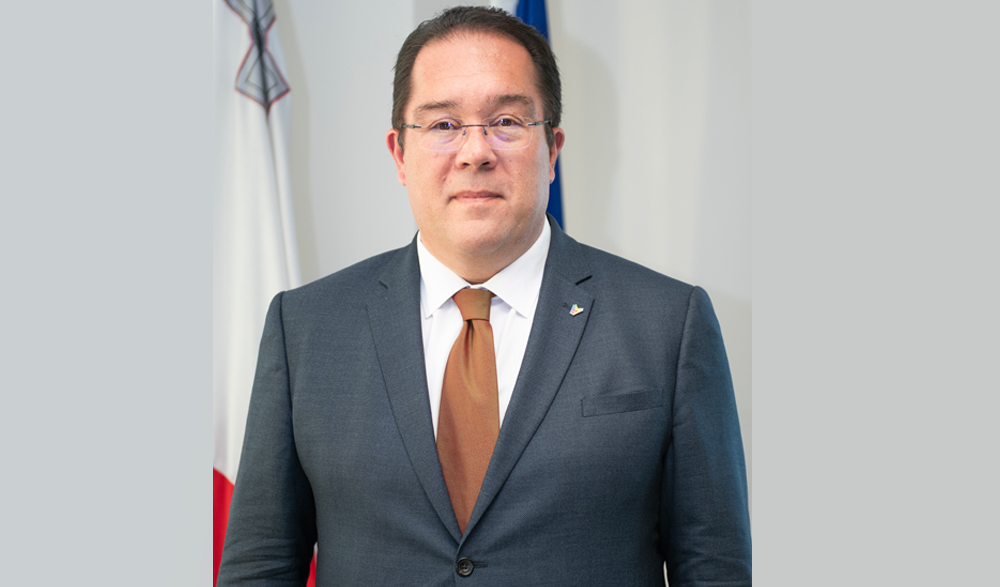
Jun 2026 Interview with Mr. Carlo Micallef, CEO of Malta Tourism Authority (MTA)
Malta’s tourism sector is showing remarkable growth, with visitor arrivals exceeding four million and tourist spending rising by nearly 19% in 2025. What trends best define Malta’s tourism performance today and what do you see as the key factors behind these exceptional results?
The key factor was that we kept Malta top of mind even during the pandemic. While many destinations stopped promoting and reduced their teams, we stayed active. We continued showcasing Malta at a time when people were at home dreaming about travelling again. We also took the opportunity to reshape perceptions. Malta is often seen as just a small Mediterranean island with beaches and a slow pace of life, but in reality it is a vibrant European destination with a beautiful climate and year-round activity. During the pandemic, we communicated this message, which helped us recover very strongly afterwards.
Last year, Malta welcomed 4 million tourists and generated €4 billion in tourism expenditure — an excellent performance for a small island. According to Eurostat and UN World Tourism Organization data, we outperformed many competitors both regionally and globally. A key part of our strategy has been securing strong air connectivity. Unlike major capitals such as London, Rome or Paris, demand for Malta must be actively created. We work closely with airlines not only to establish routes but also to ensure seats are filled sustainably. Our marketing is highly targeted and strategic. Rather than sending one general message across Europe, we focus on specific audiences and personas that best match the tourism experience Malta offers. When we promote a niche product like diving, we don’t advertise in national newspapers or on general television. Instead, we target people who are already interested in that experience. Digital tools allow us to take a very focused, data-driven approach and match destinations with travelers’ motivations and expectations.
How do you standout from other islands and other competition in the European tourism space and what year-round activities do you promote?
We don’t compete on price, because Malta is not the cheapest destination. Instead, we offer strong value for money. Visitors may pay slightly more than elsewhere, but the quality of the experience and service makes it worthwhile. We consistently deliver more than we promise, which encourages people to return. This strategy helps us maintain Malta as a year-round destination. While summer remains strong, the fastest growth is happening in the winter months, from October through April. We are achieving this by targeting specific segments such as meetings, incentives, conferences and short city-break holidays.
In winter, we compete with cities like Budapest, Prague, Lisbon, Porto and even Dubai. In summer, Malta positions itself more as a resort destination. During that season, our focus is not on increasing numbers but on improving quality and visitor spending through major events and experiences. Strong air connectivity, targeted marketing and close cooperation with the tourism industry are all key to our success. Around 30% of visitors return within two years, which is very high for a small destination like Malta. These repeat visitors also become ambassadors, recommending Malta to friends and family and today, through social media, they can share their experiences with thousands of people. We aim to spread tourism across Malta and beyond the main hubs such as Valletta, St. Julian’s, St. Paul’s Bay and Mellieħa.
At the same time, we are developing accommodation in smaller villages, including high-quality boutique hotels and guesthouses, often created through the restoration of historic buildings in both Malta and Gozo. Gozo currently receives around 200,000 overnight foreign visitors, while about 2.3 million people visit for the day. Our goal is to encourage more of these day-trippers to stay longer and return for overnight visits. Gozo offers a different experience from Malta: it is more traditional, relaxed, rural and close to nature. It is so attractive that even Maltese residents regularly visit for short breaks.
Our goal is to increase overnight stays in Gozo by around 10–20% over the next three years — for example, adding 50,000 more visitors who stay one or two nights instead of just visiting for the day. We want to encourage ‘twin-center’ holidays: a few nights in Malta and a few in Gozo. This gives visitors the best of both worlds — the vibrant, lively side of Malta with nightlife and culture and the more relaxed, natural and traditional atmosphere of Gozo.
Importantly, Gozo must remain distinct. We do not want it to become “Malta 2.0”, but rather a complementary destination offering a different experience. In the past, Gozo was very quiet in winter, with many businesses closed. Gozo is now much more accessible — in addition to the ferry service from Cirkewwa, you can now travel from Valletta in about 40 minutes and enjoy a meal before returning the same day or staying overnight. Additional fast ferry services are being introduced linking tourism hotspots of Sliema and St. Paul’s Bay to Gozo.
Our broader vision is to keep tourism sustainable, with a target of around 4.5 million visitors annually, focusing on value rather than volume. We also see a global trend toward shorter but more frequent travel. Average stays in Malta have decreased from about 12 nights years ago to around 6 nights today, but overall spending per trip remains strong because travelers budget per holiday, not per night. This means we are effectively serving more visitors in shorter stays, increasing both activity and economic impact while maintaining balance.
Above all, our strategy is authenticity. We don’t try to copy other destinations — we focus on improving what Malta already is, refining it and ensuring it continues to meet modern traveler expectations while staying true to its identity. We have successfully diversified our tourism source markets. In the past, we were heavily dependent on the UK, which at one point accounted for around 60% of arrivals. Today, it represents about 21%, although it remains our largest market. We have also grown other key markets significantly. Poland is a strong example — today we welcome around 400,000 Polish visitors, making up roughly 10% of total tourism. Italy is our second-largest market, supported by proximity and strong air connectivity, followed by Poland and France.
We are also expanding further into long-haul markets. From North America, we receive around 90,000 visitors from the United States and about 25,000 from Canada. In addition, we are developing tourism from Latin America, particularly Brazil and Argentina, as well as Asia, including Japan and South Korea, the Middle East and Australia.
Our strategy is to reduce reliance on any single region and build a balanced mix between Europe and the rest of the world. This is especially important because Europe now behaves as a single economic space, so diversification helps us manage risk and stability. We also see strong potential in culturally connected markets, such as Latin America, where visitors often come for study, work or leisure. These experiences help create long-term ambassadors for Malta, as people return home and share positive impressions of the destination.
One of the four pillars of Vision 2050 is sustainable growth, a priority that aligns closely with Malta’s shift toward quality tourism. How has that transition evolved and what does “quality tourism” mean for Malta today in real, measurable terms?
We are working hard to improve tourism management and better control visitor flows, which is essential for sustainability. We are investing in AI systems to monitor tourist movements across Malta, especially during peak periods such as with cruise ship arrivals. We are also introducing new transport solutions to reduce congestion. The Ministry of Transport is encouraging greater use of sea transport, including fast ferry services to Gozo. New routes from key tourist areas such as Valletta, Sliema and St. Paul’s Bay will further reduce pressure on the road network.
At the same time, we are updating planning policies to protect the environment and improve quality. New tourism development will be more strictly controlled, with clearer zoning rules, limits on overdevelopment and restrictions on building heights to avoid high-rise “pencil” buildings. Instead of expanding into new land, we are prioritizing the restoration of existing and historic buildings. This encourages more boutique accommodation and heritage-based tourism while protecting Malta’s character. We are also strengthening sustainability standards, making certifications such as Green Key increasingly important for hotels and restaurants.
In parallel, we are supporting the industry to adopt AI and digital tools to improve efficiency, while keeping people focused on delivering the personal service Malta is known for. Overall, the aim is to balance tourism growth with quality of life, protecting land and heritage, and ensuring tourism benefits both visitors and the local community.
Another pillar of Vision 2050 focuses on infrastructure, mobility and efficient public services that benefit both residents and visitors. These improvements are key to advancing Malta’s year-round tourism model. How do you keep this progress aligned with residents’ needs while helping Malta deliver a high-quality visitor experience throughout the year?
The Malta Tourism Authority has significantly expanded air connectivity. A few years ago, Malta was connected to only a few airports in Italy, such as Rome, Milan, Naples and Catania. Today, we are connected to around 21 airports in Italy, all across the Italian peninsula. In Germany, we previously had flights mainly to Frankfurt and Munich but now we are connected to around 10 German airports. This improved connectivity is not only about bringing tourists to Malta, but also about giving Maltese people more opportunities to travel abroad. In the past, reaching destinations like Portugal often required long connecting flights through Germany or Italy. Today, travel is much easier and direct.
Tourism therefore benefits both sides: it supports inbound travel while also opening up the world for Maltese residents. The same applies to events, concerts and cultural activities held in Malta, which further strengthen this exchange. Big international artists such as Pitbull and Katy Perry are performing in Malta and more major acts are expected in the coming months. This allows both tourists and residents to enjoy world-class events locally, without travelling abroad. Tourism has helped put Malta on the map, attracting high-profile entertainment and delivering clear benefits to the local population that are not only economic.
Looking ahead, we need to continue investing in infrastructure, particularly a modern multipurpose convention center. This is part of the Vision 2050 plan and would support conferences, expos, concerts and indoor sports such as basketball and volleyball — activities we currently cannot fully accommodate.
We also see potential for a unique family theme park, different from traditional amusement parks. Rather than copying concepts like Disneyland or Legoland, Malta could develop something original linked to its identity and film heritage. Malta has already been used as a filming location for major productions such as Gladiator, Troy and Assassin’s Creed, often standing in for other destinations. The opportunity now is to position Malta as the story itself, not just a backdrop. A successful example was when the Colosseum film set in Gladiator was built in Malt. That generated huge global interest, with audiences even asking to visit it after release. It showed the strong potential of film tourism — and the need to develop experiences that bring that world to life in a lasting way.
Malta is reinforcing its position in the MICE segment, supported by the new €3 million Conferences & Expos Marketing Support Program and a more focused effort to attract international business events. Where do you see Malta’s strongest advantages today as a meeting and events destination and how does this segment contribute to a more diversified and resilient tourism economy?
We run a targeted marketing program to promote Malta as a destination for conferences, meetings, expos and corporate events, particularly for C-level executives and international organizations. We work closely with private companies, associations and event organizers to position Malta as an attractive option for hosting international meetings. As an island destination, we face structural disadvantages compared to mainland Europe, where travel between countries can be extremely easy and low-cost.
For Malta, flight connectivity must be actively supported and promoted through marketing and strong airline partnerships. This is combined with solid infrastructure — quality hotels, professional service providers and conference facilities — which allows Malta to compete effectively in the meetings and events sector. Unlike larger countries in Europe, Malta does not have multiple regional and local authorities promoting different cities. As a small island, this role must be driven centrally by the Malta Tourism Authority, which must actively promote the destination in detail and position it internationally.
In this way, we ensure Malta remains visible and competitive in the global meetings and incentives market. Historical sites have played an important role in this strategy and Heritage Malta has restored and revitalized many sites over the years. There has been a clear shift in approach — from purely preservation to active management and promotion. In the past, sites were restored, opened briefly and then closed again. Today, they are available as magnificent locations for events to remember.
Today, there is a continuous program of restoration, rehabilitation and public engagement. We work closely with Heritage Malta to ensure these sites are also used for cultural and event purposes where appropriate. Venues such as the Mediterranean Conference Centre, the Grandmaster’s Palace and major archaeological sites like Ġgantija are now used for selected events, weddings and cultural activities. This helps generate revenue that supports the high cost of conservation. The reality is that maintaining heritage is extremely expensive and without sustainable use, these sites would be nearly impossible to upkeep. There is also ongoing work to recover historical assets that were lost over time, including arts and artefacts that appear on the international market, reinforcing the importance of protecting and reclaiming Malta’s heritage. Overall, the focus is on balancing preservation with accessibility — ensuring these historic places are protected, enjoyed and sustained for future generations.
What is your final message for the international readers of Foreign Policy?
Malta is best known as a holiday destination and while we welcome significant visitor numbers, we are not a mass tourism destination. What makes Malta popular is its diversity — visitors come not only for sun and sea, but also for history, culture, heritage, food and unique experiences all in one trip.
Looking ahead, our main focus for the next 20 years is to grow Malta as a destination for meetings, incentives, conferences and exhibitions. Today, people expect more than just a venue — they want to connect with the destination itself. Malta is very well placed for this. We have the infrastructure and professional services, but also a unique setting where meetings can be combined with memorable experiences in historic and scenic venues.
Our goal is to strengthen Malta’s position in the meetings sector while continuing to grow as a high-quality destination for leisure holidays, always giving higher value for money and experience.
Sorry, the comment form is closed at this time.