
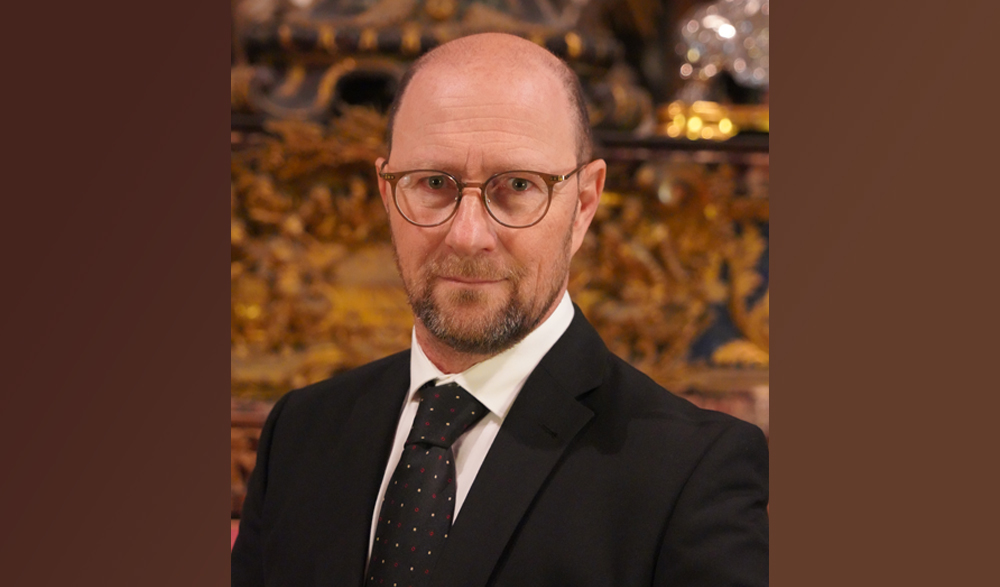
Jun 2026 Interview with Mr. Tonio Mallia, CEO of St. John’s Co-Cathedral, Malta
St. John’s Co-Cathedral is not just a historical landmark, it is a living institution evolving in real time, with major projects reshaping its future. How do you define your vision for the Co-Cathedral and what does leadership look like when you are simultaneously safeguarding centuries of heritage while redefining its role for a global audience?
St. John’s Co-Cathedral is the most visited site in Malta, welcoming around 650,000 visitors a year — about 2,500 a day. When I joined four years ago, the goal was to take the foundation to the next level. My predecessor, who led the institution for 17 years, oversaw an extensive restoration program that transformed the Co-Cathedral from a neglected state into a restored masterpiece. Today, much of the visible restoration has been completed, so our focus has shifted to upgrading the infrastructure — electricity, water systems, lighting and introducing modern connectivity such as Wi-Fi.
In short, we are preserving its splendor while bringing the entire site into the 21st century. Four years ago, we restarted the construction of the new museum, which had been on hold for two main reasons: archaeological findings on the site and the impact of COVID-19. Excavations revealed human remains, as the area was historically a cemetery, which required careful archaeological work. After the pandemic, we had to relaunch the project.
Since then, our team has worked to take the institution to the next level. Today, we manage the site not only as a cathedral, but as a multi-functional entity — a place of worship, a museum, a research site and a venue for concerts and national events. Our goal is to preserve and continuously restore this heritage while managing it sustainably, so it remains in excellent condition for future generations.
Can you share how specific projects have helped attract more visitors to St John’s Co-Cathedral?
My priority with the COO was modernizing the basic infrastructure. The cathedral’s telephony was outdated, so we replaced it with an IP-based system, allowing seamless internal communication, even via mobile devices. We then upgraded the electrical wiring, which enabled a full overhaul of the lighting system. The previous setup was outdated halogen lighting, difficult to maintain and harmful to the experience when failures occurred. We replaced it with a modern LED system that is more reliable, energy-efficient and safe for the artwork, as it produces no heat and protects the gilded interiors and paintings.
This work was part of a broader strategy developed with a strong internal team, including the COO and CPO, to modernize the cathedral step by step while ensuring it remains open to visitors and continues to generate the revenue needed for its upkeep. All these upgrades were done in parallel. Today, the Co-Cathedral benefits from a modular lighting system that can be controlled remotely, allowing us to adjust brightness and lighting zones depending on the use of the space — whether for religious services, concerts, exhibitions or visitor hours. While we worked with external suppliers, much of the implementation was carried out by our in-house team, which we are very proud of. This allowed us to keep the cathedral operational throughout the process, even as work continued over several months.
After the lighting project, we upgraded the entire networking and server infrastructure. Today, the cathedral has full Wi-Fi coverage, and all systems are integrated into a modern network that will also connect with the new museum. Without altering the historic structure, we have successfully brought the cathedral’s infrastructure into the 21st century.
Another key project was restructuring the organization. The cathedral had been managed in a very traditional, parish-style model, so we introduced a modern corporate structure with clear roles, including a CEO, COO and CPO. At the same time, we began building an in-house restoration capability. Today, we have around 15 restorers and we are developing a true center of excellence that combines restoration, research and scientific analysis. Restoration here is a full process — from historical study to cleaning and conservation — not just repair work. We also strengthened the operations team by expanding and training maintenance staff, who now assist with early-stage restoration work under expert supervision, as well as supporting projects like lighting installation. In parallel, we expanded and trained our custodial team to improve visitor experience. Overall, it has been a major transformation, and I am very proud of the team we have built.
Beyond its religious significance, the Co-Cathedral serves as a venue for concerts, national events and even corporate gatherings. Could you share more about the opportunities it offers for international visitors and companies?
Ideally, we want to offer exclusive after-hours visits where guests can experience the cathedral privately, away from daytime crowds. During the day, we focus on creating not just a visit, but an experience — something memorable that visitors truly connect with and carry with them afterwards. We also aim to link the physical space with interpretation, helping visitors engage more deeply with the art, architecture and history.
Even in group visits, the goal is immersion rather than simple sightseeing. We already see strong results: many visitors return and our free audio guide helps enhance the experience. Some even choose special evening openings, where we can guide them more personally, highlight details they might miss, like the vault, and create a more reflective atmosphere, sometimes enhanced by music. This is the experience we want to grow: not just showing the cathedral but helping people truly feel it and return.
For after-hours events, together with the CMO, we try to go beyond concerts and exhibitions and create unique experiences. For example, we recently organized an event focused on the Maltese language. Although we expected a niche audience, we received a very diverse group — from students to older visitors, including foreigners who wanted to experience Maltese in this setting. The concept included translating each chapel’s commentary into different languages, which visitors greatly appreciated. This showed us that the cathedral attracts a wide audience and people engage with it in different ways. Our after-hours programs are successful because they offer exclusivity, flexibility and tailored experiences for both local and international guests. We also develop premium formats such as guided wine tastings and curated events in partnership with wine producers, linking the experience to the history of St John’s and the Grand Masters.
Overall, we aim to create meaningful, diverse experiences while also developing sustainable, high-value offerings. From the outside, the Co-Cathedral looks almost like a fortress, with a simple Mannerist façade. However, inside it delivers a real “wow” moment — walls covered in 24-carat gold, a marble floor of masterpieces and a vault painted by Mattia Preti, crowned by two Caravaggio works. This contrast is what makes the experience so unique. I have worked here for four years and I still discover something new every day. That is why exclusive tours add real value. For example, an American delegation recently stopped for a brief visit and later said they regretted only having 15 minutes — they planned to return and spend a full day here.
What is your final message for our readers of FOREIGN POLICY?
It is not just the cathedral—the entire island of Malta has a unique history, from its earliest settlements and megalithic temples, some older than the pyramids, built at a time when much of Europe was still in caves. Despite various invasions over the centuries, Malta has preserved its identity and distinct culture.
St John’s Co-Cathedral, built by the Knights of St John, is a clear example of this blend: commissioned by the Knights, but brought to life by Maltese craftsmen, including a Maltese master mason. This combination of international influence and local heritage is what makes the cathedral — and Malta itself — so unique.
When we inherited the Co-Cathedral, it already reflected a strong Maltese identity. It is a truly unique place, comparable only to sites like the Vatican’s major chapels, because everything built here was approved by the Pope through the Order of St John. This makes it not only a masterpiece of Baroque art, but also a reflection of Maltese heritage. A good example is the “Baptism of Christ” marble group: although completed by the Italian sculptor Giuseppe Mazzuoli, its design was created by the Maltese artist Lorenzo Gafà, with later contributions linked to his brother Melchiorre Cafà.
This blend of Maltese creativity and the Order’s influence is what gives the Co-Cathedral its deeper cultural significance and why it offers such a unique experience of Malta’s history and identity.
Sorry, the comment form is closed at this time.