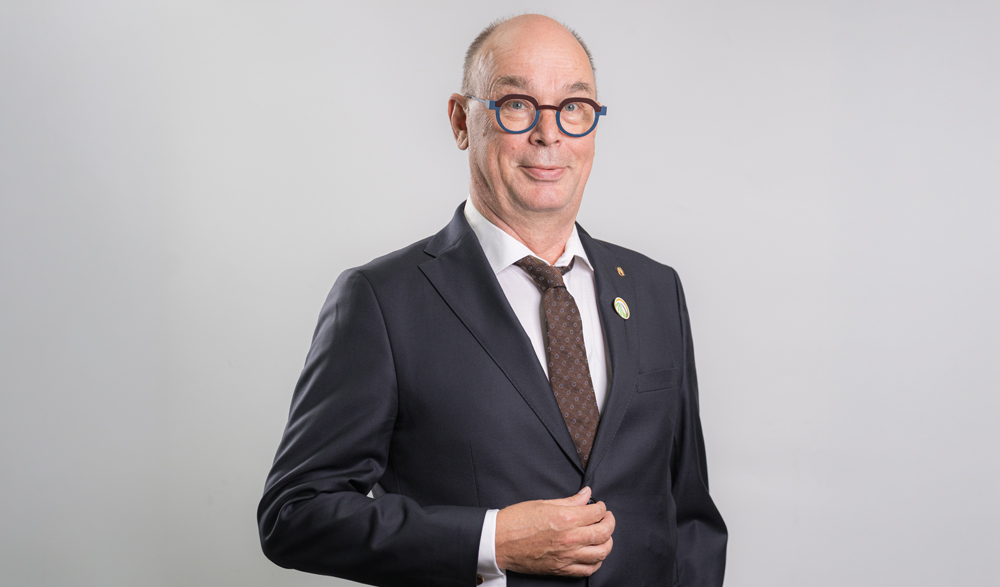
Jun 2026 Interview with Harri Kiiski, CEO Brunei Fertilizer Industries (BFI), Brunei
In 2024 Brunei recorded its strongest economic expansion since 1999 with 4.2% growth. This was driven not only by a rebound in the oil-and-gas sector but also by a heavy shift toward downstream industrial development under Wawasan Brunei 2035. What key policy, investment, and execution factors have enabled such rapid growth in Brunei’s downstream sector under Wawasan Brunei 2035?
Traditionally, Brunei’s global engagement has centered on oil and gas. Through downstream development, we are expanding the country’s international footprint and increasing its global exposure. Diversification does not replace oil and gas; it strengthens the economy by building additional sectors.
Brunei Fertilizer Industries (BFI) is one of Brunei’s key downstream industries, alongside Hengyi Industries and Brunei Methanol Company, our neighbor in the Sungai Liang Industrial Park. What makes BFI unique is that we export to countries that previously had no trade relationship with Brunei, including Chile, Peru, Ecuador and Argentina. BFI plays an important role nationally and regionally, supporting Brunei’s Wawasan 2035 vision of economic diversification.
BFI was established in 2013. The project was awarded in 2017, construction began in 2019, commissioning took place in 2021 and commercial production started at the end of 2022. Our growth trajectory has been strong and steady. In 2023, we had over 900,000 tons, for our first full commercial year. In 2024: over 1 million tons, 2025: approximately 1.1 million tons, including a planned turnaround. Three years ago, our Bruneian workforce participation was about 65%; today, it is approaching 80%. The number of expatriates running operations has steadily declined as more Bruneians take management roles.
One success factor was timing. The plant began operations during COVID-19 and the Russia-Ukraine crisis, when global urea prices were high and supply chains were disrupted. Events such as restrictions in the Panama Canal and instability affecting major shipping routes highlighted the importance of reliable fertilizer supply. BFI benefited from being a new producer located close to key markets. From Brunei’s perspective, Africa lies to the west, Southeast Asia to the north, Australia and New Zealand to the south and the west coast of the Americas to the east — placing BFI near important agricultural regions.
At the same time, some major producers, including China and Indonesia, limited exports to meet domestic demand, creating opportunities for new suppliers. Our first step was to engage directly with customers to understand their expectations for products and services and we responded quickly. As a result, BFI has grown steadily in regional markets, becoming one of the top suppliers to countries such as Australia, the Philippines, Vietnam and Thailand, even with production of about one million tons annually.
What strategic advantages does BFI gain from its location at Sungai Liang Industrial Park and how has proximity to other industrial players translated into operational and commercial gains?
Fertilizer plants need efficient access to export routes, as logistics is a major part of production cost. At BFI, we have our own jetty, allowing us to serve regional markets with vessels of about 6,500 tons, limited by the current seven-meter draft. We also use the national port in Muara, about 30 miles from the plant, which can handle vessels of up to 33,000 tons — an ideal size for shipments to Australia and the west coast of the Americas.
In addition, Brunei receives around 50,000 import containers annually that often return empty, creating an opportunity to export fertilizer in containerized form. This gives BFI a flexible logistics range, from 20-ton container shipments to 6,500-ton coastal vessels and 33,000-ton bulk carriers. With future dredging at Muara Port to accommodate larger vessels, our location near major shipping routes to the Strait of Malacca will provide an even stronger logistical advantage.
Looking ahead, what operational refinements or capacity enhancements are being considered to further optimize performance and support future expansion?
From the beginning, we implemented an Operational Excellence program at BFI. This was especially important given that our workforce included 14 nationalities and around 30 different company cultures. By bringing together international expertise and best practices, we created one unified way of working — the BFI way. This journey has strongly supported our safety performance. We are now approaching 1,000 days without a reportable injury for both employees and contractors — a world-class achievement. During construction, we recorded four accidents over 23 million working hours, resulting in an accident rate below 0.2, significantly lower than the industry average of three to four per million working hours.
Operational excellence and safety remain the foundation of our continuous improvement. We are targeting our nameplate capacity of 1.365 million tons within the next few years. This year, we expect close to 1.2 million tons, up from 1.1 million last year — reflecting steady growth and strong employee engagement.
Sustainability remains an important part of our journey. While global attention has shifted due to geopolitical tensions and energy security concerns, we expect sustainability to regain strong momentum within the next few years. We are preparing for that transition. In ASEAN, initiatives such as a regional power grid could enable access to hydropower from Sarawak and increased solar capacity across the region, including in Brunei. With solar costs now around four cents per kilowatt hour, driven largely by developments in China, green electricity is becoming more economically viable. This could support future production of low-carbon hydrogen and ammonia, provided the economics are right.
Brunei also has a natural advantage in carbon management. After more than 100 years of oil and gas production, there are depleted reservoirs suitable for CO₂ storage located close to our operations. Compared to some European producers that must transport CO₂ long distances for storage, we are geographically well positioned. These structural advantages place us in a strong position when the next wave of sustainability investment accelerates.
What concrete decarbonization measures has BFI implemented across its operations, from renewable integration to energy-efficiency improvements?
A new, modern fertilizer plant can reduce energy use and emissions by about 40% compared to plants built 30–40 years ago. Building BFI with the latest technology was therefore our first major environmental step, giving us significantly lower specific energy consumption than the industry average. Since BFI did not exist in 1990, we focus on continuous measurement and improvement — tracking energy efficiency, CO₂ emissions and operational reliability.
Stable operations are critical, as unplanned shutdowns increase emissions and resource use. Logistics is another advantage. Because of our location, shipments to Australia and the west coast of the Americas can generate around 30% less transport-related CO₂ emissions compared to suppliers from the Middle East or North Africa.
We also look beyond Scope 1 and Scope 2 emissions to Scope 3, particularly in agriculture. Traditional fertilizer use can lose up to 40–50% of nitrogen, increasing environmental impact. To address this, we are developing inhibitor-enhanced fertilizers and micronutrient solutions, including zinc enrichment in Southeast Asia, where soils are often micronutrient-deficient. These solutions support both crop productivity and human nutrition. In addition, soil-health solutions that improve root development and nutrient-use efficiency are part of our sustainability approach. Sustainability in fertilizers is complex, but BFI is building a strong and practical pathway forward.
Through its Way of Work initiative, the company has emphasized productivity, inclusivity and local participation, with Bruneians now accounting for 79% of its workforce. Can you outline the core pillars of BFI’s Way of Work initiative and how it shapes the company’s operational culture?
Brunei has a literacy rate of around 98–99% and most citizens receive strong foundational education. Many pursue higher education in the UK, Malaysia, Australia and New Zealand, providing a solid platform for skilled employment. The workforce is available and well educated. The key challenge is building specific competencies and operational experience. Education is not the issue — practical exposure and hands-on development are.
Our Operational Excellence program has helped empower Bruneians to take ownership and leadership roles, moving from reliance on expatriates to a more locally driven organization. Talent management is therefore a priority. We even renamed our HR department to the Talent Management Department to emphasize that our people are our key asset. Safety, sustainability, operational excellence and talent development are all closely connected in our long-term success.
About 30% of our employees are women and nearly 80% of our workforce is Bruneian. Diversity is a key strength for BFI and our culture is built around strong shared values. Our values — excellence, engagement, integrity and respect — guide how we work together and support our commitment to building a high-performing team.
In 2024, BFI signed a five-year framework service agreement with thyssenkrupp to accelerate digital transformation at its plant. Which digital technologies deployed at BFI most clearly differentiate the plant from regional and global peers?
Digitalization is clearly the direction the world is moving and artificial intelligence is playing an increasingly important role across industries. At BFI, we have partnered with thyssenkrupp to develop a digital twin of our plant. This enables advanced monitoring, remote support and lays the foundation for greater use of AI in operations. We are also applying AI in practical ways. For example, during maintenance welding work, we use AI-enabled fire-watch cameras that detect sparks or fire risks in real time — even hours after the work is completed — improving safety and response time.
In addition, we collaborate with the International Fertilizer Association on AI-driven risk identification and maintenance best practices. As a single-plant operator, digital tools are especially valuable for us. Larger companies benefit from multiple plants and larger engineering networks. For BFI, AI is not about replacing people — it is about supporting our teams, improving reliability and ensuring consistent performance for our customers.
BFI now exports fertilizer products to more than 20 countries, with steadily growing volumes destined for the U.S. How important is the U.S. as a market for Brunei’s fertilizers and why does it remain strategically attractive despite ongoing global trade talks?
The U.S. is not a major market for us, but it can be an opportunistic destination, particularly on the West Coast when local supply is limited. California, with its strong environmental regulations, could become an important market for our newer, more sustainable fertilizer products. While the U.S. has significant domestic urea production, supplying the West Coast often requires long-distance transport from the Mississippi region or shipments via the Gulf of Mexico and the Panama Canal. Due to our geographic location, BFI can offer logistical and sustainability advantages in serving that market.
How critical is investment in agrifoods and fertilizers in meeting rising global demand within Southeast Asia and what role do fertilizers play in building a sustainable global food system?
The Russia-Ukraine conflict highlighted how dependent many countries are on a small number of major food exporters. Russia, Ukraine and Brazil together account for a significant share of globally traded agricultural products. Even if the conflict ends, it may take time for trade relationships and supply chains to stabilize. Food security is becoming increasingly linked to geopolitics. As cooperation among BRICS countries [Brazil, Russia, India, China, South Africa] grows, trade flows in agricultural commodities and fertilizers could shift, raising questions about how non-BRICS countries will secure supply.
At the same time, policy changes in regions like Europe may affect agricultural production and exports. Traditionally, food has been kept outside sanctions and tariffs, with the United Nations emphasizing the importance of protecting global food supply. However, this remains an issue to watch closely, as changes in trade policies or geopolitical alignment could reshape global food flows.
Food security is an issue we must watch closely. Rising nationalism in global politics could affect the free movement of food that globalization once enabled. It is important to ensure that food is never used as a political weapon.
How would you summarize your long-term vision for the next chapter? What would you like to accomplish in the next two-to-five years?
I hope my legacy will be that BFI is recognized as a strong and reliable supplier of agricultural inputs, while also contributing to lower-carbon farming solutions. Reducing emissions in agriculture is critical. For example, producing two pounds of wheat generates about 7 ounces of CO₂, while rice cultivation can produce around 2.2 pounds of CO₂ per pound, largely due to methane emissions. This is especially important in South and Southeast Asia and China, where most of the world’s rice is grown and a large share of the global population depends on it. Looking ahead, I hope to see clear policies, technologies and fertilizer solutions that help reduce the carbon footprint of rice production.
Sorry, the comment form is closed at this time.