
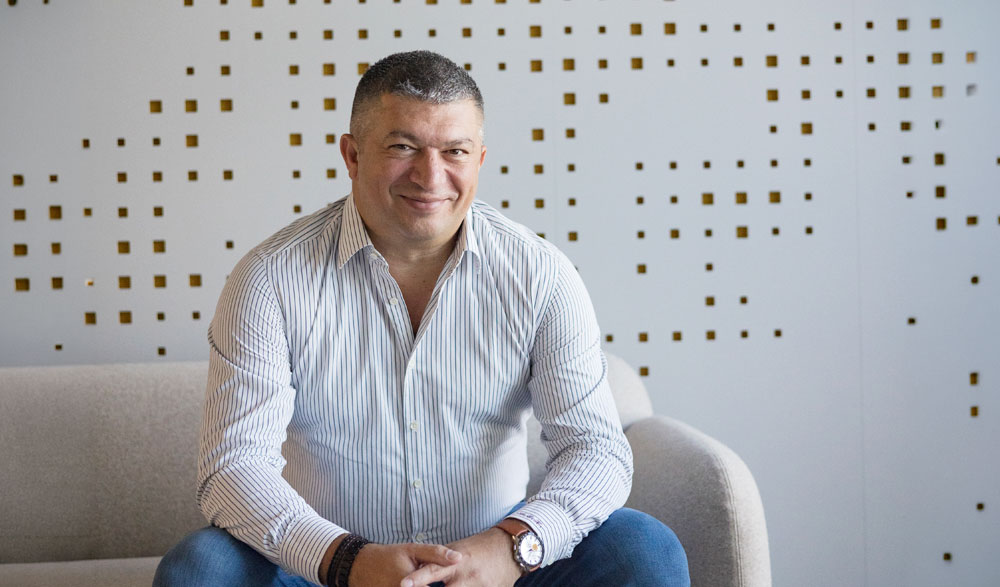
Apr 2026 Interview with Mr. Cenk Kahraman, CEO of Finance Incorporated Limited, Malta
As Malta continues to position itself as a dynamic financial hub under Malta Vision 2050, institutions like Finance Incorporated Limited play an increasingly important role in shaping the future of financial services. How would you describe the company’s core mission and its strategic role within Malta’s evolving financial ecosystem?
Malta aims to become a global leader in the FinTech and payments industry and achieving this depends on several key factors. Regulation is one of them. While most regulations are set at the European level and applied across all member states, what really matters is how it is implemented locally. In this respect, I believe the Malta Financial Services Authority is doing a good job.
The second factor is infrastructure. Malta has historically faced challenges in payment infrastructure, which is surprising given that the country has some of the fastest internet speeds and strongest connectivity in Europe. However, the government, together with the Central Bank of Malta, is now taking concrete steps to address this. These improvements will create strong momentum toward achieving Malta’s FinTech vision.
From our perspective, although we are locally positioned, we compete at the European level. Our strategy is aligned with Malta’s national direction, while also focusing on expansion beyond our borders. The FinTech and payments industry is constantly evolving. Even basic bank transfers have changed dramatically over the past decade due to technological progress and this transformation continues to create both opportunities and challenges.
Small and medium-sized enterprises are the backbone of many economies and digital tools are key to their growth and competitiveness. How are your merchant solutions, such as Paymix SoftPOS and Paymix Via, supporting businesses in adapting to a more digital and cashless environment?
We serve four main client segments: individuals, corporate clients and both physical and e-commerce merchants. Each group has different needs. Historically, our strongest focus has been on the B2B and corporate side, where we built our core revenue base. Retail clients were not our initial priority, mainly because the segment is highly competitive and requires millions of users to scale effectively — something difficult to achieve from Malta alone. However, this is changing. We are now investing more in products designed for individuals and expanding our retail offering is a key priority this year – this is inspired by our UBO, Mr. Burak Basel, who strongly believes in creating meaningful value for individuals.
On the corporate side, we already support a wide range of clients — from those sending a few payments per month to others processing thousands daily through ERP integrations and API connectivity. Regardless of volume, our approach remains the same: as a digital institution, we aim to provide reliable and efficient service to every client segment. Our merchant segment is relatively new for us, as we only began point of sale operations last year. It is an area we are actively building and developing.
Our goal is to offer merchants a more connected financial ecosystem through a single app or account — similar models already exist globally, so we are not reinventing the wheel in Europe, but combining best practices. Merchants should be able to accept payments via cards, mobile devices, Apple Pay and Google Pay, while also gaining access to their finances and future financial services such as lending. The European market is highly competitive, but we believe our offering is strong and scalable and we aim to grow our market share both locally and across Europe. We also serve e-commerce clients, which is another highly saturated segment. In acquiring, scale matters significantly: larger institutions benefit from better pricing due to volume efficiencies.
Innovation and technology are at the heart of modern financial services, particularly with the rise of fintech and digital payments. How is Finance Incorporated Limited integrating technologies like AI and blockchain into its strategic agenda?
AI and blockchain are often described as the major trends in technology today. I strongly believe in the role AI will play, not only in the financial sector, but in our daily lives. Blockchain is a useful technology, particularly for specific applications such as stablecoins and central bank digital currencies, but its impact on everyday use cases may be more limited than many expect.
We have supported blockchain technologies since 2018 and were among the early partners of Ripple when it was just beginning to build its presence in the U.S. Although the results did not fully develop as initially expected, we believed in the vision behind the technology.
AI, however, is a completely different story. We are only beginning to explore its potential for businesses and society. Because AI continuously learns and evolves, it requires organizations to rethink many processes from the ground up. At the moment, we are using AI mainly in transaction monitoring and screening, while closely following developments across the market. Our goal is to integrate it meaningfully into our products to support clients in their day-to-day activities. That vision will take time, but it is clearly the direction toward which we are moving.
What is your view on machine learning in relation to AI, especially its ability to learn, adapt and improve over time?
This is extremely important for our business. As a payments company, we move money from one side to another. Ten years ago, payments were traditional financial transactions because they involved time delays. Today, technology enables instant transfers across the world — from Malta to Argentina or Japan — in seconds, supported by stablecoins, blockchain solutions and central bank real-time gross settlement systems. Because of this shift, payments are increasingly becoming data transactions rather than purely financial ones.
According to a 2024 report by PwC, around 90% of client insights come from payment behavior. Access to payment data therefore provides a powerful understanding of customers. This is where AI becomes critical. It can identify patterns and analyze large client portfolios far more effectively than humans. In my view, AI will be one of the most important drivers of change in the payments industry and institutions that fall behind risk losing relevance.
From a FinTech perspective, how do you see the future of crypto assets like Bitcoin at the European level?
Bitcoin is a different type of asset compared to newer crypto projects built on smart contracts or tokenized structures. It is the foundation of the crypto ecosystem, which is why its price movements influence the wider market. It was the first of its kind and continues to serve an important role. However, regulation is designed to provide oversight, while Bitcoin was created to operate without centralized control. At a conceptual level, this creates tension, so regulatory acceptance of Bitcoin may remain limited.
Other crypto and virtual assets are generally more adaptable to existing regulatory frameworks and are likely to remain part of Europe’s financial landscape. Institutions such as the European Central Bank, European Banking Authority, the European Commission and the European Payments Council are strongly focused on developing pan-European solutions like the digital euro. In the short term, crypto-asset companies are likely to continue growing in Europe, but over the longer term the market may become more challenging as official digital payment infrastructure develops.
Regulation is an essential part of any structured industry. Without it, there would be less fairness, more fraud and greater risks for consumers. However, inconsistent or selective application of regulation can create imbalances in the system. We believe regulation exists not only to protect end users, but also institutions like ours. Rather than seeing it as a constraint, we see it as a framework that helps guide innovation and responsible growth. The key is how regulated institutions adapt and operate within these rules to support their clients and achieve their objectives.
How is Malta positioned in terms of financial infrastructure and how does Finance Incorporated Limited contribute to improving and leveraging it?
The Central Bank of Malta initially developed a payment infrastructure designed for limited use cases, but it has since been upgraded and is now evolving with greater input from the private sector, including companies like ours. The approach has become more proactive, with a clear focus on strengthening the ecosystem. In a small economy like Malta, I believe the most effective model is a central payment orchestration system led by the central bank, with participation from all licensed financial institutions. This is increasingly becoming the direction of travel, supported by ongoing discussions with European bodies such as the European Payments Council and the European Payments Initiative.
We can also learn from examples like Lithuania, where the central bank developed a payments infrastructure called CENTROlink and opened it to European payment institutions, which significantly increased transaction volumes and influence within the European system. For Malta, the key is to adopt and combine best practices from other markets and apply them locally — not just for today, but with a long-term view. Planning must start now, even if the future is uncertain, because strategies will always need to evolve as conditions change.
Looking ahead, long-term vision and adaptability are essential in navigating global financial trends and challenges. What are your key priorities for the future and how do you see Finance Incorporated Limited evolving in the years to come?
We operate with one, three and five-year plans, with a clear focus on expanding beyond our borders and strengthening our presence across Europe. As part of the Doxxon Group, our vision is to build a global network of financial institutions that creates synergies for both existing and future clients. The aim is to connect group companies under a unified ecosystem that supports seamless financial services across markets.
We already have a payments infrastructure business connected to Visa and Mastercard and we intend to expand this model by establishing additional licensed entities in different regions. This will allow us to offer globally connected services driven by client needs rather than internal ambition. Our five-year goal is to build a broader financial ecosystem covering payments, cards, stablecoins, financing and insurance, creating a truly integrated global offering for our clients.
What is your final message for our readers of FOREIGN POLICY?
I was born in Turkey, but I have lived in Malta for 21 years and consider myself proudly Maltese. Over that time, Malta has changed significantly. In the past, it was often misunderstood and viewed through outdated perceptions. Today Malta is one of the most robust jurisdictions for doing business, with very strong anti-money laundering regulations and a continuously improving regulatory framework. There is clear political will to further strengthen the country’s position as a reputable financial center.
I believe that, in time, Malta will be increasingly recognized internationally for the quality and integrity of its business environment. Today, Malta is an integral part of the European Union and operates under some of the strictest regulatory standards, particularly in payments and financial services. When comparing practices with counterparts in countries such as the UK or Germany, certain approaches in those jurisdictions may at times appear more flexible. From our perspective, higher regulatory requirements can increase costs and reduce competitiveness, but regulators are consistent in their approach and focused on maintaining a secure and well-controlled financial ecosystem. Overall, Malta remains a strong and reputable jurisdiction for conducting business within a strict but well-structured regulatory environment.
Sorry, the comment form is closed at this time.