
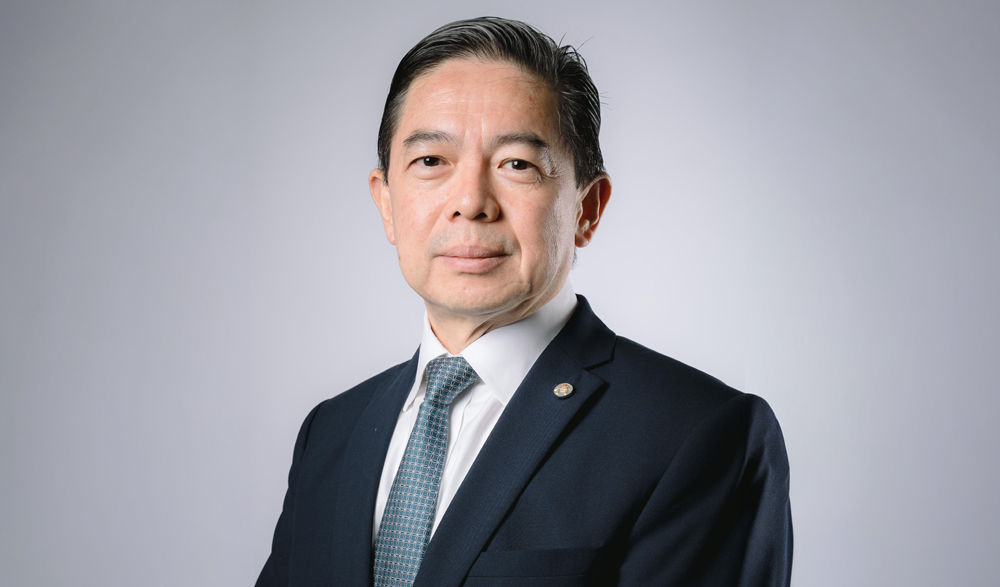
Jun 2026 Interview with The Honourable Dato Dr Amin Liew Abdullah, Minister at the Prime Minister’s Office and Minister of Finance and Economy II, Brunei
Under the Wawasan Brunei 2035 program, the nation has successfully begun a massive diversification of its economic pillars, with the non-oil and gas sector now contributing more than 50% of GDP, while non-hydrocarbon exports make up around 70% of total exports. Could you outline some of the major milestones or achievements reached under the Wawasan Brunei 2035 program and how the Ministry plans to maintain the momentum in non-oil sectors?
Our achievements in 2024 reflect not only the work done during the year, but also the cumulative efforts of the past 10–15 years. We have seen significant improvements in Brunei’s macroeconomic environment, particularly over the last decade. The non-oil and gas sector now contributes more than 50% of GDP and nearly 60% of exports, while unemployment has declined from around 9% in 2017 to about 4.7% in 2024. These results are guided by Brunei Vision 2035, which focuses on transforming Brunei into a nation recognized for its highly skilled people, high quality of life and a dynamic and sustainable economy.
Under the Brunei Darussalam Economic Blueprint, we have identified key sectors where Brunei has competitive strengths including the downstream oil and gas and food industries and we are beginning to see tangible results. However, while Brunei’s economy is more diversified today, it has not reached full diversification yet. External factors, including global price fluctuations and trade tension, will continue to affect growth. We therefore remain committed to strengthening diversification, developing priority sectors and investing in the infrastructure needed to support growth in these sectors.
At the same time, we remain open to investments beyond these priority sectors, particularly those that create quality jobs, enable technology transfer and expand trade opportunities. Flexibility will remain essential as we continue diversifying the economy.
What structural reforms or regulatory changes are being looked at the moment by the government to support the development of a truly diversified, knowledge-based economy? Where are the priorities in terms of the reform agenda?
Today, there is a strong whole-of-government commitment to economic diversification. All ministries are committed to working closely together to support foreign direct investments. Whether an investor approaches our ministry or another, proposals are treated with equal importance and coordinated across the relevant agencies to ensure a smooth process. The Brunei Economic Development Board serves as the front line in engaging and evaluating FDI proposals, with full cooperation from other ministries — whether related to land, utilities or other infrastructure requirements.
Our goal is to ensure investors feel welcomed and well supported. We are also actively expanding market access through various free trade agreements, both bilaterally and through the Association of Southeast Asian Nations (ASEAN) and the Comprehensive and Progressive Agreement for Trans-Pacific Partnership (CPTPP). These agreements are helping our products to reach new destinations and diversify our trade. As a member of the CPTPP, for instance, we have been able to access new markets and export to countries such as Peru, Chile and Mexico for the first time in recent years.
At the same time, we are working to raise international awareness of Brunei as an investment destination. In the past, Brunei’s value proposition remained under-explored. Today, growing interest reflects our outreach efforts and our clear message: Brunei welcomes foreign direct investments and remains open to global partners.
Which priority diversification sectors do you see as most promising for attracting foreign direct investment over the next five years and how is the government working to develop these?
One of our priority sectors is downstream oil and gas, which we began developing about 10 to 15 years ago. Today, it has built strong momentum. Our focus is not simply to attract investors, but to ensure the necessary ecosystem is in place — including access to raw materials and feedstock. The development of refineries, methanol and fertilizer plants has created new feedstock that supports further downstream chemical activities. We expect these downstream developments to gradually lead us into higher-value manufacturing, including consumer goods production and we are confident this progress will continue well before 2035.
Food production is another important priority. Over the past 15 years, we have made good progress in the aquaculture sector — including prawn farming and both onshore and offshore fish farming — as well as vegetable production and rice cultivation. These efforts are gaining momentum. We are now moving toward a more integrated approach by building a complete ecosystem for the food sector. We are shifting to a “plug-and-play” environment where investors can move more quickly with ready access to the necessary infrastructure.
ICT is another priority area. Our strategic investments in telecommunications over the last eight years have paid off and, today, Brunei now ranks among the top ten globally for mobile internet speed, with 5G coverage extending to more than 90% of the population. Our focus now is not only on infrastructure, but also on encouraging the development of applications and digital services that make full use of this technology. To support this, we have introduced initiatives such as a digital payment gateway to make transactions easier and to strengthen the digital economy. We recently launched a national digital ID system that securely integrates personal data to support digital services and applications. Alongside this, we have upgraded our data centers to strengthen the country’s digital infrastructure and enable private-sector innovation.
During COVID-19, Brunei developed its own contact-tracing application with artificial intelligence capabilities to predict infection trends and the results proved highly accurate. Rather than discontinuing the platform after the pandemic, we continued to develop it in collaboration with the Ministry of Health. Post-COVID, this technology has evolved into a digital health management system. For example, we are using AI to help predict long-term health trends, including diabetes prevalence in the community, so that healthcare resources and investment can be planned more effectively. This initiative was recently featured at the World Economic Forum in Davos, helping to raise Brunei’s profile in digital health innovation.
In services, our long reliance on oil and gas meant that many activities were outsourced but we are now transitioning towards internalizing these high-value services. We are focusing on developing local capabilities in areas such as decommissioning, ship repair and maintenance — services that support both the offshore energy sector and growing industries like aquaculture. A new shipyard in Brunei will soon become operational to support these activities. Beyond this, we are exploring opportunities in wellness, biodiversity research linked to our rainforest and pharmaceutical manufacturing through international collaboration. These service industries are interconnected and can also support tourism growth, particularly in wellness and nature-based experiences. Together, they represent important opportunities to capture more value within the country and further diversify the economy.
Brunei is accelerating innovation through focused education reform, startup funding and digital infrastructure. With its highly educated population, what steps is Brunei taking to better align talent development with future workforce needs in key growth sectors?
As part of Brunei Vision 2035, we are aligning our educational framework to meet the demands of emerging industries and prepare a future-ready workforce. I recently spoke with Bruneian students, sharing that the integration of AI and technological change is changing the nature of work and that the jobs they train for today may not exist when they graduate. Therefore, our focus is on developing foundational expertise and innovative thinking that allows our graduates to thrive in an ever-changing economic environment.
The key is to build strong foundations in STEAM — science, technology, engineering, arts and math — so students and young professionals are adaptable. To support this, we have established a lifelong learning center several years ago, allowing people of all ages to upskill or reskill as the job market evolves, ensuring they remain relevant and are able to contribute to the economy.
In 2025, a new long-term visa was introduced for foreign professionals and investors, alongside new industrial parks aimed at boosting non-oil sectors. What role do you envision for international partners in Brunei’s economic transformation? What message would you convey to encourage long-term, responsible investment in non-oil sectors?
We want foreign investors to know that Brunei is serious about attracting investment and that we are providing a supportive environment. Some investors prefer a local partner when they make their investment in Brunei. If they cannot find one, the government can step in through a special investment vehicle. Their success is our priority. We also assist with financing, working closely with local banks to facilitate loans or co-investment. Beyond capital, we emphasize technology transfer and workforce training, ensuring that new jobs benefit Bruneians. Free trade agreements further allow investors to export to new markets on favorable terms, making Brunei an attractive and reliable investment destination.
What final message would you like to share with the readers of Foreign Policy about Brunei’s position as an emerging global economic player and its role in shaping a more connected, sustainable Southeast Asia?
Brunei is an active member of ASEAN, CPTPP and the recently launched Future of Investment and Trade Partnership led by Singapore — partnerships that shape the future of trade and investment. Despite being a small economy, our participation in these high-standard agreements signal that our trade policies are robust and reliable. Investors can be confident that Brunei’s trade framework addresses emerging global issues. Combined with a supportive investment environment, including facilities like long-term visas, we ensure that investors can feel secure and are well-supported.
Sorry, the comment form is closed at this time.